Dental crowns
A dental crown is a cap that fits over a tooth the dentist has reshaped. It rebuilds a broken, worn or weakened tooth and protects it.
See the steps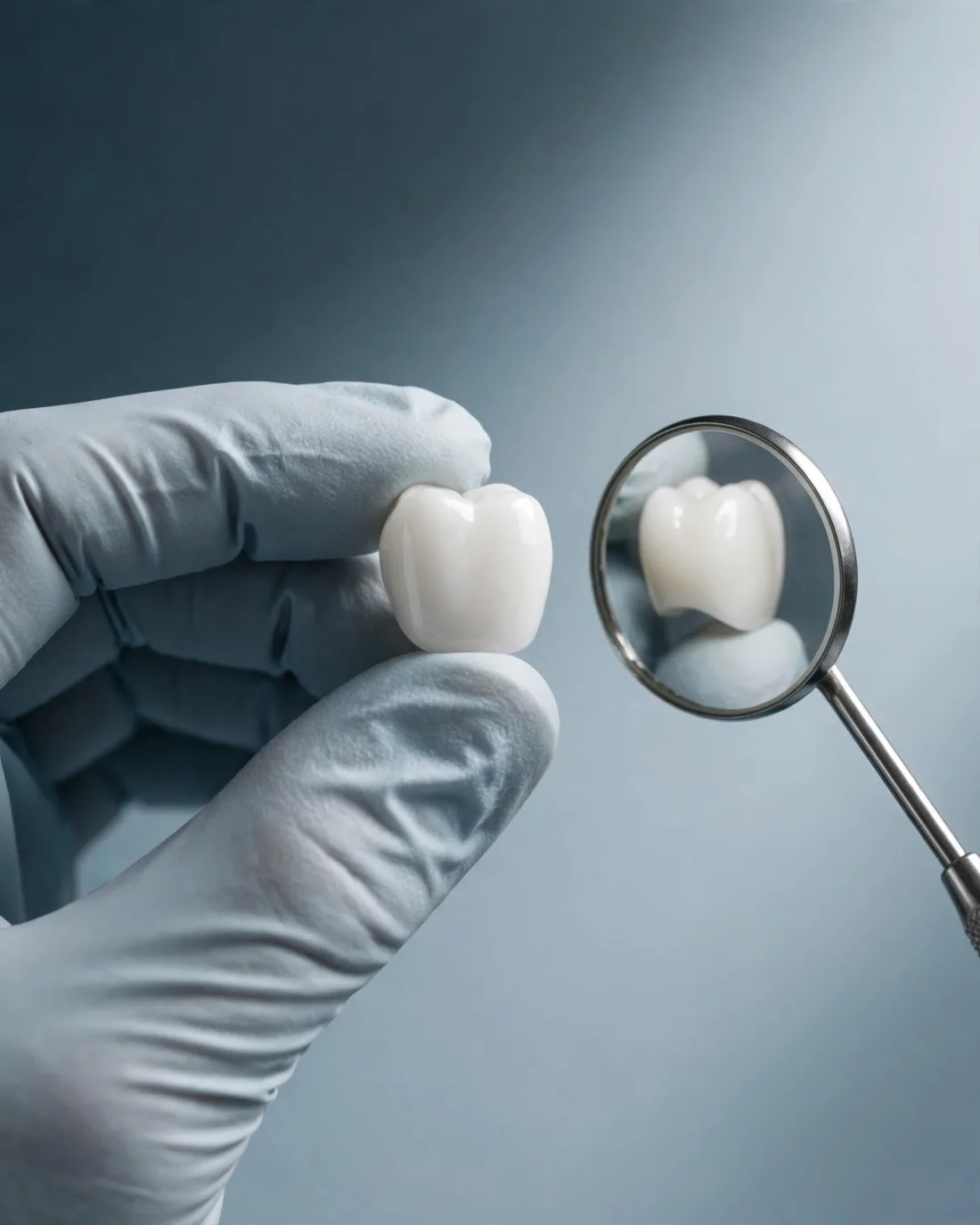
- 2 visitsUsually needed to fit a crown
- About 2 weeksBetween reshaping the tooth and cementing the permanent crown
- 8 to 10 yearsNormal life of a properly cared-for crown
- 98.3%Single crowns on living teeth still in place after 5 years
What a dental crown is
A dental crown, sometimes called a cap, is a restoration that improves a tooth’s appearance, strength and function. It fits over a tooth the dentist has reshaped, so it does involve removal of some tooth structure (Leeds Teaching Hospitals NHS Trust).
A tooth may need a crown when a large filling or cavity has weakened it, when large discoloured fillings in a front tooth affect appearance, when wear has reduced its size, or when a root-filled tooth has a large filling and is weakened (Leeds Teaching Hospitals NHS Trust). Treatment for the root is covered on the root canal treatment page, and fillings on general dentistry.
Crowns come in three main materials. Tooth-coloured porcelain with a metal lining gives strength and appearance, metal alloys (a mix of gold or silver and other metals) are used where strength matters and the tooth is not visible, and all-ceramic porcelain is used where the crown shows and the bite is not heavy (Leeds Teaching Hospitals NHS Trust).
How long a dental crown lasts
A properly cared-for crown normally lasts around 8 to 10 years. That depends on regular dental check-ups, thorough brushing and flossing and a low-sugar diet (Leeds Teaching Hospitals NHS Trust).
A 2024 systematic review in the Journal of Prosthodontics pooled 26 studies and found a 5-year survival rate of 98.3% for single crowns on living teeth. For root-filled teeth, all-ceramic crowns with a fibre post reached 95.0%, and metal-ceramic crowns with a cast metal post reached 90.7% (Hawthan, Larsson and Chrcanovic). The authors note that the number of studies was limited, and that a living tooth appears to help a crown survive.
Crown, filling or veneer
A crown, a white filling and a veneer can all repair a damaged tooth. A white filling bonds to the enamel, and a porcelain veneer suits a front tooth where the bite is not heavy (Leeds Teaching Hospitals NHS Trust).
| Compared on | Dental crown | Veneer |
|---|---|---|
| Covers | The whole reshaped tooth | The front surface only |
| Tooth removed | Some tooth structure | Usually less than for a crown |
| Cemented with | Cement, after a temporary crown | White filling material |
| Suits | Weakened, worn or heavily filled teeth | A front tooth where the bite is not heavy |
A veneer covers only the front surface, usually removes less tooth than a crown, and is cemented with white filling material (Leeds Teaching Hospitals NHS Trust). Veneers are covered on their own page.
Who a dental crown suits
- A tooth weakened by a large filling or cavity
- A worn-down tooth
- A root-filled tooth with a large filling
- Good daily cleaning
- Gums free of active disease
A dental crown suits a tooth that is weakened, worn or heavily filled and needs rebuilding and protecting. A crown may not be suitable with poor oral hygiene, high decay rates, active extensive gum disease, clenching or grinding, a minimally restored tooth, or a young patient (Leeds Teaching Hospitals NHS Trust).
Where grinding is the problem, a custom guard is covered on the mouthguards page. The dentist weighs each of these factors when choosing between a crown and a lighter repair.
Getting a dental crown, step by step
Assessment
The dentist checks whether the tooth needs a crown or whether a white filling or a veneer would do. The material is chosen to suit where the tooth sits and how hard you bite.
Rebuilding the tooth, if needed
A badly broken-down tooth may need a post, a metal or fibre pin cemented into it, sometimes after root canal treatment. A fibre post can be placed at once with a white filling core built up on it, and the permanent crown made at a later visit.
First visit: reshaping and impression
The tooth is reshaped and an impression is taken and sent to the dental laboratory. The dentist fits a temporary crown with temporary cement.
Second visit: fitting
About two weeks later the temporary crown is removed and the permanent crown is cemented in place.
Aftercare
Brushing twice a day with fluoride toothpaste, cleaning between the teeth and limiting sugar all help the crown last. Regular check-ups with the dentist and hygienist complete the routine.
Questions about dental crowns
How long does a dental crown last?
A properly cared-for dental crown normally lasts around 8 to 10 years. Regular check-ups, good brushing and flossing, and a low-sugar diet all affect how long it lasts. A 2024 review of 26 studies found that 98.3% of single crowns on living teeth were still in place after 5 years.
How many visits does a dental crown take?
A dental crown usually takes two visits. At the first the tooth is reshaped, an impression is taken and a temporary crown is fitted. At the second, about two weeks later, the permanent crown is cemented.
Does a tooth have to be filed down for a crown?
Yes. A dental crown fits over a tooth the dentist has reshaped, so it does involve removal of some tooth structure. A veneer usually removes less, which is one reason a veneer is sometimes considered for a front tooth.
What are dental crowns made of?
Dental crowns are made of porcelain with a metal lining, of metal alloys, or of all-ceramic porcelain. Metal alloys are used where strength matters and the tooth is not visible when smiling, and all-ceramic is used where the crown shows and the bite is not heavy. The dentist advises on the best option for each tooth.
Can I have a dental crown if I grind my teeth?
Clenching or grinding is one reason a dental crown may not be suitable. Others include poor oral hygiene, high rates of decay and active, extensive gum disease. Your dentist can advise whether a crown suits your mouth.
What affects the cost of a dental crown?
The cost of a dental crown depends on the material chosen, whether the tooth needs a post or other rebuilding first, and the laboratory work involved. Your dentist should set out each stage and its cost before treatment starts.
Related treatments
A cracked, decayed or infected tooth can often be kept. A filling or crown rebuilds it, root canal treatment clears infection from inside it, and taking it out comes last.
General dentistry
Check-ups, cleaning and fillings that keep teeth and gums healthy.
Root canal treatment
Treatment that clears infection from inside a tooth so the tooth can be kept.
Tooth extraction
Removing a tooth that cannot be saved, with a plan for the gap it leaves.
Mouthguards
Custom guards for grinding at night and for contact sports.
A dental crown is planned around the tooth it protects, so you know the material and the two visits before the tooth is reshaped.
Explore all treatments