Root canal treatment
Root canal treatment removes infection from inside a tooth, then cleans, fills and seals it so the tooth can stay in your mouth. It is usually done under local anaesthetic over two or more appointments.
See the steps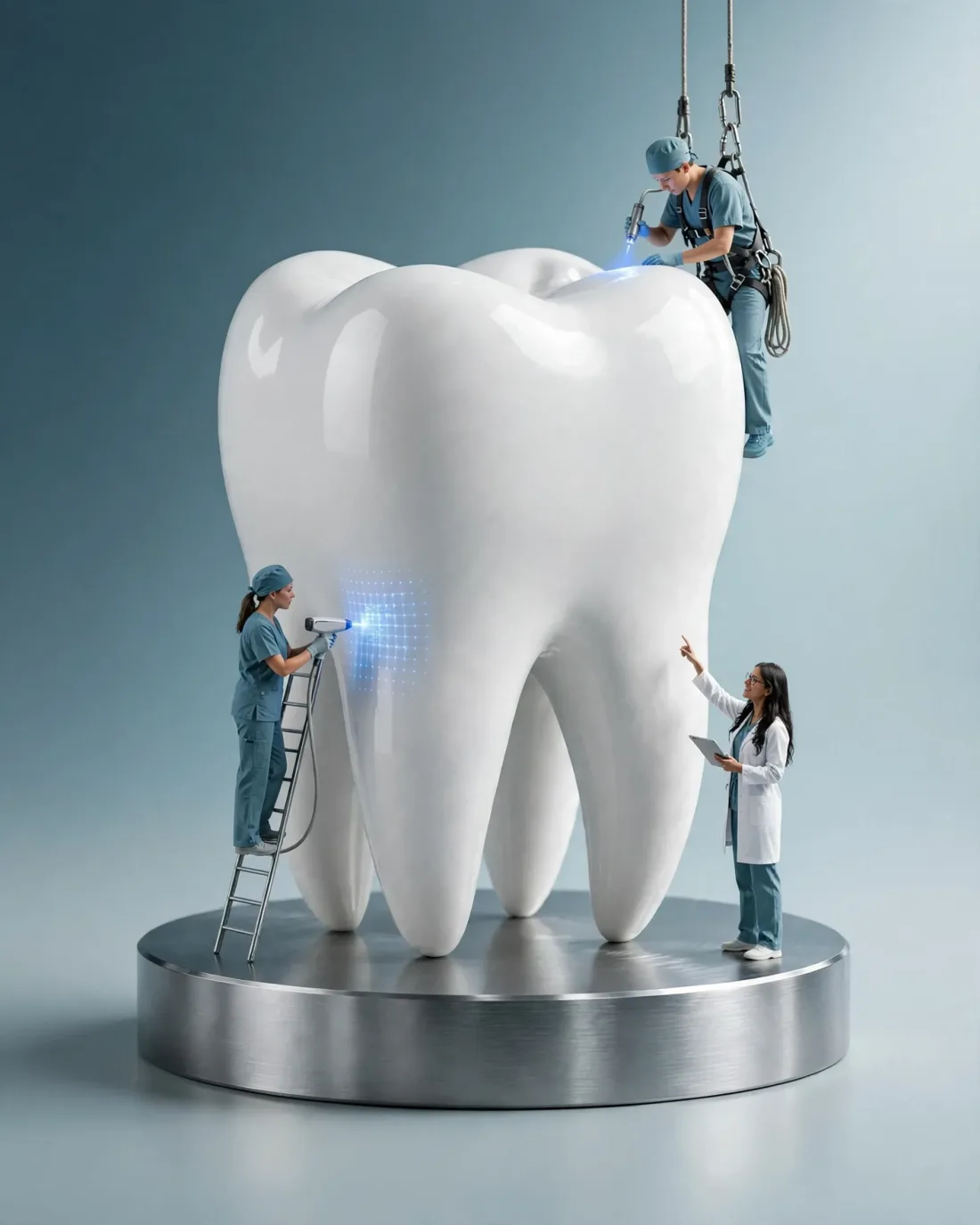
- 2 or moreAppointments usually needed
- 1 to 2 hoursTypical length of each appointment, or longer
- LocalAnaesthetic usually given, so you feel no pain
- 86% to 93%Teeth still in place 2 to 10 years after treatment
What root canal treatment is
Root canal treatment removes an infection from inside a tooth, then cleans and fills the tooth to help prevent a new infection (NHS). The infection sits in the pulp, the soft tissue in the middle of the tooth. Tooth decay, gum disease, a chipped, broken or cracked tooth and a dental abscess can all lead to it. Treatment is usually done under local anaesthetic and takes 2 or more appointments, each lasting 1 to 2 hours or longer.
A tooth with a treated root no longer has a living nerve and can become more brittle. A crown covers and strengthens it, which is why one is often recommended afterwards (Oral Health Foundation). See dental crowns for how a crown is made and fitted.
How long a root-filled tooth lasts
A root-filled tooth often lasts for years. A 2010 systematic review in the International Endodontic Journal pooled 14 studies and found tooth survival of 86% at 2 to 3 years, 93% at 4 to 5 years and 87% at 8 to 10 years (Ng, Mann and Gulabivala). The authors noted that the studies differed widely in design, so the figures are a guide and not a promise.
The same review found that a crown after treatment was the factor most linked to a tooth surviving. Teeth that were not used to hold a bridge or a removable denture, and teeth that were not molars, also did better. A treated tooth can still decay if it is not cleaned well (Oral Health Foundation).
After treatment, numbness in the jaw and face can last several hours as the anaesthetic wears off, and the area may be swollen and sore for a couple of weeks. Paracetamol or ibuprofen helps, as does avoiding bumps to the mouth. Attend follow-up appointments and keep up regular check-ups, because brushing and cleaning between the teeth protect the tooth that was saved (NHS).
Root canal treatment or taking the tooth out
Root canal treatment and tooth extraction are the two usual answers to an infected tooth. Without root canal treatment, an infected tooth may need to be taken out (NHS).
| Compared on | Root canal treatment | Tooth extraction |
|---|---|---|
| The tooth | Kept, cleaned, filled and sealed | Removed |
| Anaesthetic | Local, usually | Local, usually |
| Soreness | Sore or swollen for up to a couple of weeks, improving | More comfortable after a few days |
| Afterwards | A crown may be advised | A gap, which can be replaced |
If a tooth is taken out, the gap can be filled with a dental implant, a bridge or a denture. Abscesses are treated by draining the pus and then either a root canal or removing the tooth (NHS). Extraction aftercare is covered by the Oral Health Foundation.
Who root canal treatment suits
- Toothache from an infected pulp
- A dental abscess
- Deep decay or a cracked tooth
- A tooth the dentist can still rebuild
- Able to attend two or more visits
Root canal treatment is recommended for tooth pain caused by infection of the pulp. Common causes are decay, gum disease, a cracked or broken tooth and a dental abscess (NHS).
Suitability depends on whether the tooth can still be restored once the infection is cleared. You can have the treatment from a general dentist, and sometimes from a specialist called an endodontist (NHS).
Root canal treatment, step by step
Numbing the tooth
A local anaesthetic is usually given first. You stay awake but should not feel pain.
Opening the tooth
The dentist drills a hole in the tooth to reach the pulp, the soft tissue in the middle.
Cleaning the canals
The infected pulp is removed and any abscess is drained. The inside of the tooth is then cleaned and shaped.
Filling and sealing
The canals are filled and sealed. When the work is split over two visits, a temporary filling usually protects the tooth in between, and a permanent filling replaces it at the second visit.
Rebuilding the tooth
A crown may be advised afterwards, especially if the tooth was badly infected. Follow-up appointments check that the tooth has settled.
Questions about root canal treatment
Does root canal treatment hurt?
Root canal treatment is usually done under local anaesthetic, so you are awake but should not feel pain during it. Numbness in the jaw and face can last several hours, and the area may be sore and swollen for a couple of weeks. Paracetamol or ibuprofen usually eases the soreness.
How long does root canal treatment take?
Root canal treatment usually takes two or more appointments, and each can last 1 to 2 hours or longer. A temporary filling is often placed between visits to protect the tooth until the permanent filling goes in.
How successful is root canal treatment?
A systematic review of 14 studies found that 86% of root-filled teeth were still in place after 2 to 3 years, 93% after 4 to 5 years and 87% after 8 to 10 years. A crown placed after the treatment was linked to better survival.
Do I need a crown after root canal treatment?
Often, yes. A tooth that has had root canal treatment has no living nerve and can become more brittle, so a crown is commonly advised to cover and strengthen it. Whether your tooth needs one depends on how much of it is left and how badly it was infected.
What happens if I do not have root canal treatment?
An infected tooth that is not treated may need to be taken out. A dental abscess will not go away on its own, so see a dentist promptly if you have swelling, a bad taste or a throbbing toothache.
What affects the cost of root canal treatment?
The cost of root canal treatment depends on how many appointments are needed, whether a specialist called an endodontist carries out the work, and whether a crown is fitted afterwards. Your dentist should set out each stage and its cost before treatment starts.
Related treatments
A cracked, decayed or infected tooth can often be kept. A filling or crown rebuilds it, root canal treatment clears infection from inside it, and taking it out comes last.
General dentistry
Check-ups, cleaning and fillings that keep teeth and gums healthy.
Dental crowns
A cap over a cracked, worn or heavily filled tooth that protects it and restores its shape.
Tooth extraction
Removing a tooth that cannot be saved, with a plan for the gap it leaves.
Mouthguards
Custom guards for grinding at night and for contact sports.
Root canal treatment is planned around the tooth in front of us, so you know how many visits to expect and what is left to rebuild.
Explore all treatments